The grand theater of Ephesus, where Paul faced the riot in Acts 19, stands as a vivid archaeological witness to the accuracy of the New Testament record.
Theater of Ephesus – Ephesus, Turkey — 1st Century C.E., Active in Paul’s Ministry (Acts 19)

Updated American Standard Version
Giving Bible readers what God said not what translators think God meant
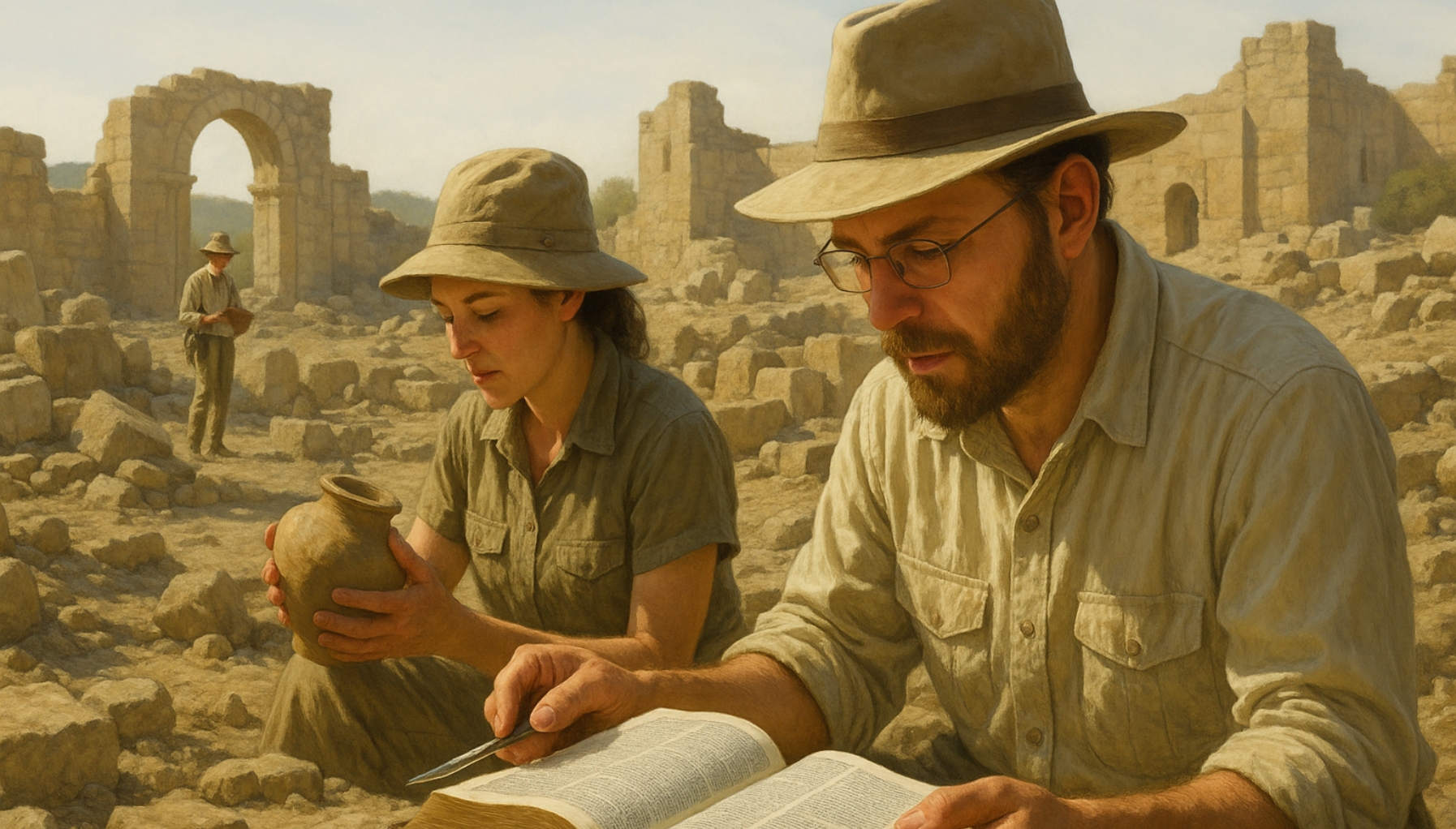
Delve into the world of Artifacts in New Testament Archaeology. Connect your faith with historical discoveries that illuminate early Christianity.
The grand theater of Ephesus, where Paul faced the riot in Acts 19, stands as a vivid archaeological witness to the accuracy of the New Testament record.

The Gallio Inscription from Delphi confirms Acts 18 and precisely dates Paul’s Corinthian ministry to 51–52 C.E., verifying Luke’s inspired historical accuracy.

Archaeological evidence from Corinth confirms Erastus, the city treasurer mentioned by Paul, validating Scripture’s precise historical record.

Archaeological evidence from Cyprus confirms the existence and title of Sergius Paulus, validating Luke’s precise historical record in Acts 13.

Archaeological discovery of the Lysanias inscription near Damascus confirms Luke’s precise historical record in Luke 3:1, validating Scripture’s accuracy.

The basalt foundation beneath the synagogue of Capernaum dates to the 1st century C.E. and confirms the very place where Jesus taught in Galilee.

Alabaster vessels and pavements in Scripture confirm the Bible’s chronology, not secular misdating, showing its role in Egypt, Persia, and Rome.

Archaeological findings consistently support the New Testament's historical accuracy, affirming its events, people, and places through tangible evidence.

Discover how ancient findings in Corinth bolster New Testament reliability. Explore the Erastus connection.

The Bone of Crucified Jehohanan (1968): The remains of a man crucified in the first century C.E., including a nail through the heel bone, were discovered in Jerusalem. This find provides physical evidence of Roman crucifixion practices, aligning with the Gospel accounts of Jesus' execution (Matthew 27:32–50).

