A Byzantine church floor in southern Israel quotes Deuteronomy 28:6, putting “Blessed are you when you come in and when you go out” under worshippers’ feet.
Byzantine Mosaics Quoting Deuteronomy 28:6 (Southern Israel, 2023 – Discovery)

Updated American Standard Version
Giving Bible readers what God said not what translators think God meant
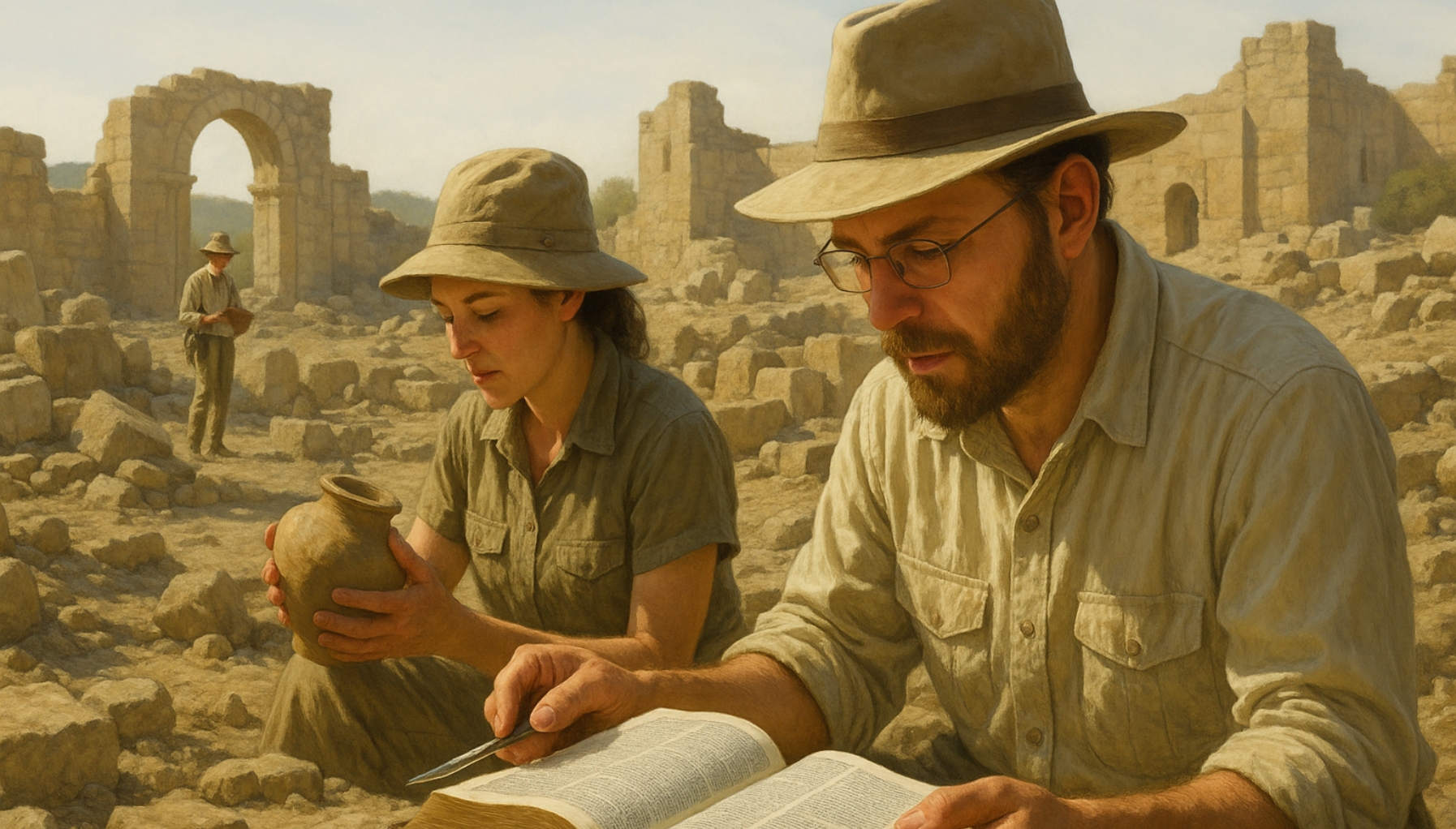
Delve into the world of Artifacts in New Testament Archaeology. Connect your faith with historical discoveries that illuminate early Christianity.
A Byzantine church floor in southern Israel quotes Deuteronomy 28:6, putting “Blessed are you when you come in and when you go out” under worshippers’ feet.

Bronze and silver crosses and inscribed amulets from the fourth–sixth centuries reveal how early believers carried Scripture and devotion to Jesus in daily life.

A third-century mosaic at Megiddo dedicates a house-church “to God Jesus Christ,” offering rare early archaeological testimony to Jesus’ deity.

Fifth-century Christians in Galilee carved “Christ born of Mary” over a church doorway, echoing the New Testament and anchoring Jesus in real history.

A detailed study of how archaeologists have dated artifacts and sites, showing how each method aligns with Scripture when interpreted within a biblical framework.

A Roman edict forbidding tomb disturbance, possibly prompted by early Christian claims of resurrection, indirectly affirms the truth of Jesus’ empty tomb.

An ornate ossuary inscribed “Joseph son of Caiaphas” confirms the historical high priest who presided over Jesus’ trial.

Archaeological discovery at Caesarea Maritima confirms Pontius Pilate’s historical existence and title as Prefect of Judea, validating the Gospel accounts.

The Caiaphas Ossuary confirms the existence of the high priest who condemned Jesus, offering tangible proof of New Testament history.

The Pilate Inscription discovered at Caesarea Maritima confirms Pontius Pilate’s historic role as Prefect of Judea, validating the Gospel record.

