Archaeology confirms New Testament people, places, titles, customs, cities, and geographical details with remarkable historical precision.
Archaeological Evidence Supporting the New Testament

Updated American Standard Version
Giving Bible readers what God said not what translators think God meant
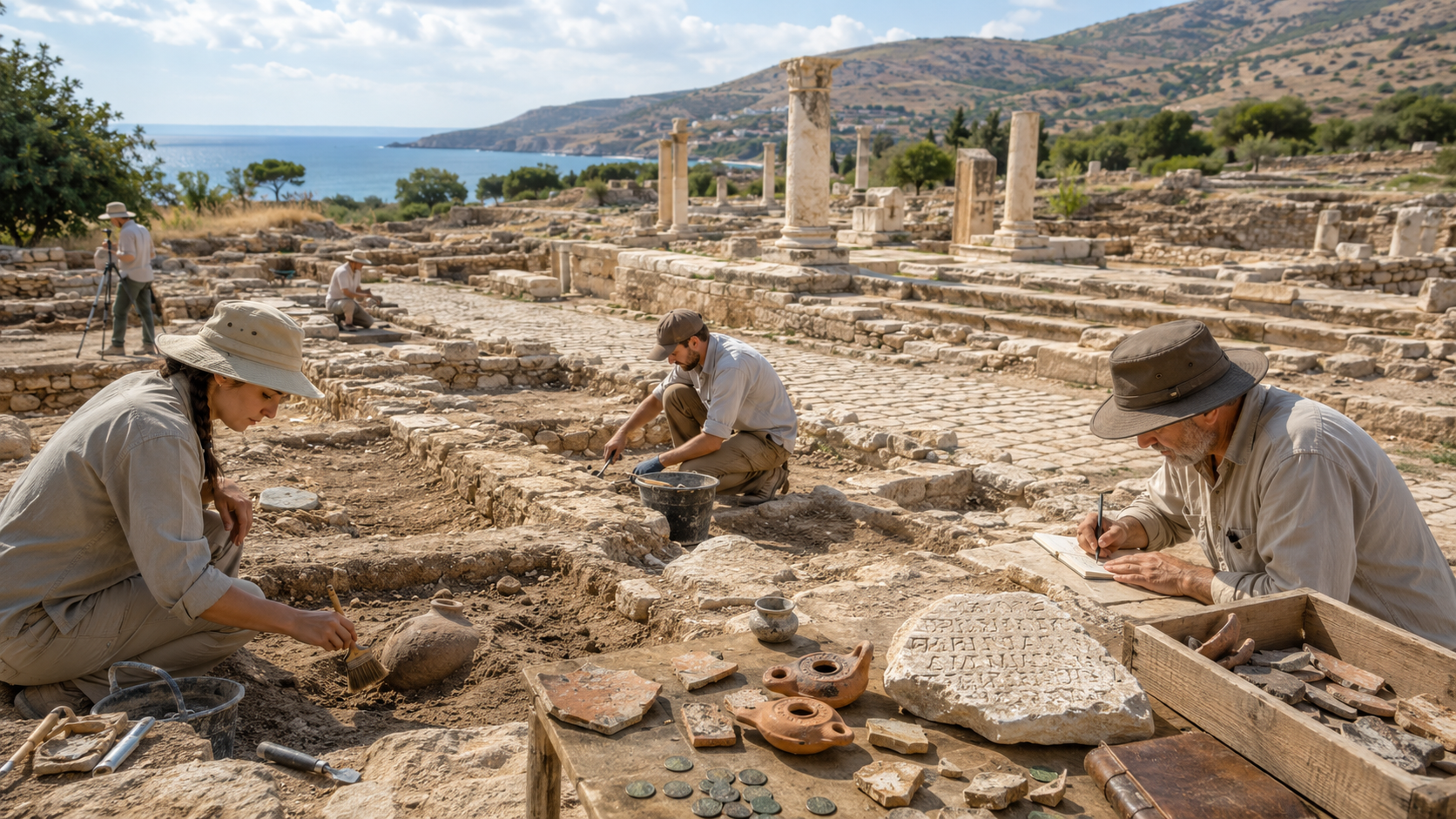
Discover the foundations of New Testament archaeology, exploring how key findings validate the historical reliability of the New Testament accounts.
Archaeology confirms New Testament people, places, titles, customs, cities, and geographical details with remarkable historical precision.

Archaeology illuminates the real historical world of Scripture and answers critics who dismiss the Bible as legend.

Archaeology confirms the Bible’s historical setting through inscriptions, cities, manuscripts, and artifacts without ruling over Scripture.

Archaeology repeatedly confirms New Testament people, places, titles, and settings, strengthening confidence in the Gospels and Acts.

Biblical archaeology shows that the dust of history does not compete with Scripture—it defends it, confirming the Bible’s historical, cultural, and textual accuracy.

Biblical archaeology follows Scripture’s own chronology, uncovering artifacts, cities, and inscriptions that trace and confirm the Bible’s historical path.

An overview of modern archaeological technologies, showing how each tool supports and illuminates the historical world described in Scripture.

A detailed exploration of archaeology’s origins and development, demonstrating how the field continually affirms the historical reliability of Scripture.

Discover how archaeological findings illuminate ancient texts. Explore the links between history and New Testament accounts.

Explore how archaeological discoveries contribute to understanding the New Testament's historical accuracy. Delve into fascinating finds that support its narratives.

