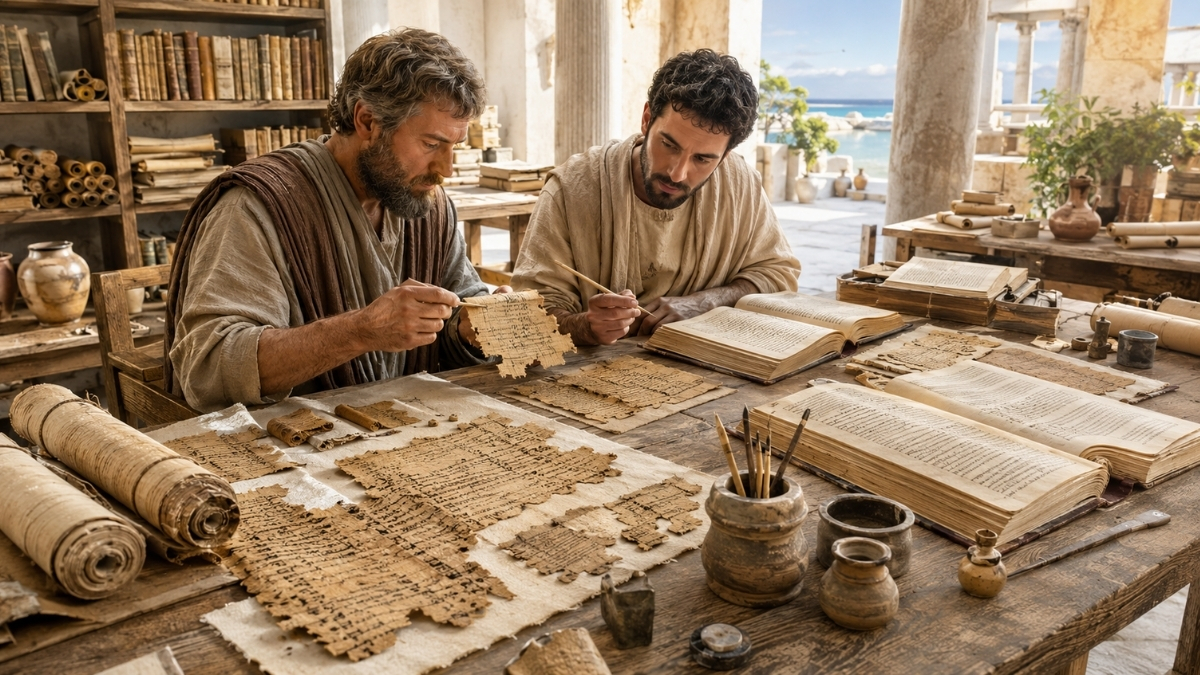
The post explores the process and principles behind establishing the Bible canon, focusing on both the Hebrew and the Greek New Testament Canon. It underscores the requirements for books to earn canonical status, i.e., evidence of divine inspiration, coherence with other biblical teachings, and endorsement by apostolic authorities. Discussions include the formation and organization of the Hebrew Canon, issues with Apocryphal texts and their contradictions, historical perspectives on the Apocrypha, and the authority of New Testament Apocryphal writings. The post reiterates the Bible’s integrity as God's inspired truth.
Could the Gospel Writers Withstand the Scrutiny of a Lawyer?
Explore whether the Gospel writers could withstand the scrutiny of a lawyer in this thought-provoking article. As a conservative Apologetic Bible scholar, we delve into the credibility and reliability of the Gospel accounts, examining the testimony of eyewitnesses, the historical context, literary consistency, and external corroboration. Discover how these factors contribute to the strength of the Gospel writers' accounts, providing valuable insights into the life and teachings of Jesus Christ.
The Authenticity of the Holy Scriptures
Discover the compelling historical evidence that authenticates the Holy Scriptures. This comprehensive exploration delves into the Gospel of Peter, the Tel-el-Amarna Tablets, and the Hittite Testimony, presenting irrefutable connections between biblical narratives and archaeological findings.
The Book of Acts: An Unfinished Story or a Fitting Conclusion?
Unravel the intriguing conclusion of the Book of Acts. Despite appearing unfinished to some, it provides a powerful testament to the ongoing mission of the church. Delve into Luke's intention, the work of the Holy Spirit, and how we fit into this enduring narrative.
THE BIBLE: A Book That Is Misrepresented
Explore how the Bible, a book of profound wisdom, is often misrepresented and misunderstood. Discover the true sense of biblical passages amidst religious biases, skepticism, critical analysis, liberal interpretations, and the deceptive influence of Satan's world. Gain insights on approaching the Bible with trust, guidance from the Holy Spirit, and diligent study to uncover its timeless truths.
Why You Can Trust the Biblical Gospels
Read the article to discover the significance of the Bible and how it compares to the Apocryphal writings. While many readers tend to give the Apocryphal sources more weight, the Apocryphal writings contradict many clear Bible teachings. What source should we trust? This article provides valuable insight into these questions and more. Don't miss out on this chance to deepen your faith by understanding the authority and correctness of the Greek New Testament!
THE BIBLE—A STORY OF SURVIVAL
The Bible has survived natural decay, fierce opposition, and deliberate tampering because it is the unique and inspired Word of God, preserved until today. Learn why the Bible is so special and dependable, and discover God's purpose for His People as revealed in His Word.
What is the Bible Canon, and How Can We Know Which Books to Include?
Discover how the 66 books of the Bible were recognized as the correct and divinely inspired books. Learn about the criteria used to determine the inspiration of these books and why they are considered to be the authoritative Word of God.
The Bible—Is It Truly “Inspired by God”?
Discover the accuracy and reliability of the Bible in discussing the natural world, history, and life's biggest questions. Is the Bible really from God? Explore the evidence and find hope for a better future through a closer relationship with your Creator.
The Canon of the Scriptures
The Greek word “biblia” is a plural noun derived from the word “biblion,” which means “scroll.” The general meaning of “biblia” is “books.” In a biblical context, the word “biblia” is commonly used to refer to the collection of books that make up the Christian Bible, both the Old and New Testaments. The Greek word “bibliia” (βιβλία) is used in the Greek New Testament to refer to books, especially religious or sacred books. In the context of the New Testament, the word is typically used to refer to the Old Testament, which was the collection of sacred texts used by Jews in the time of Jesus and the early Christians.