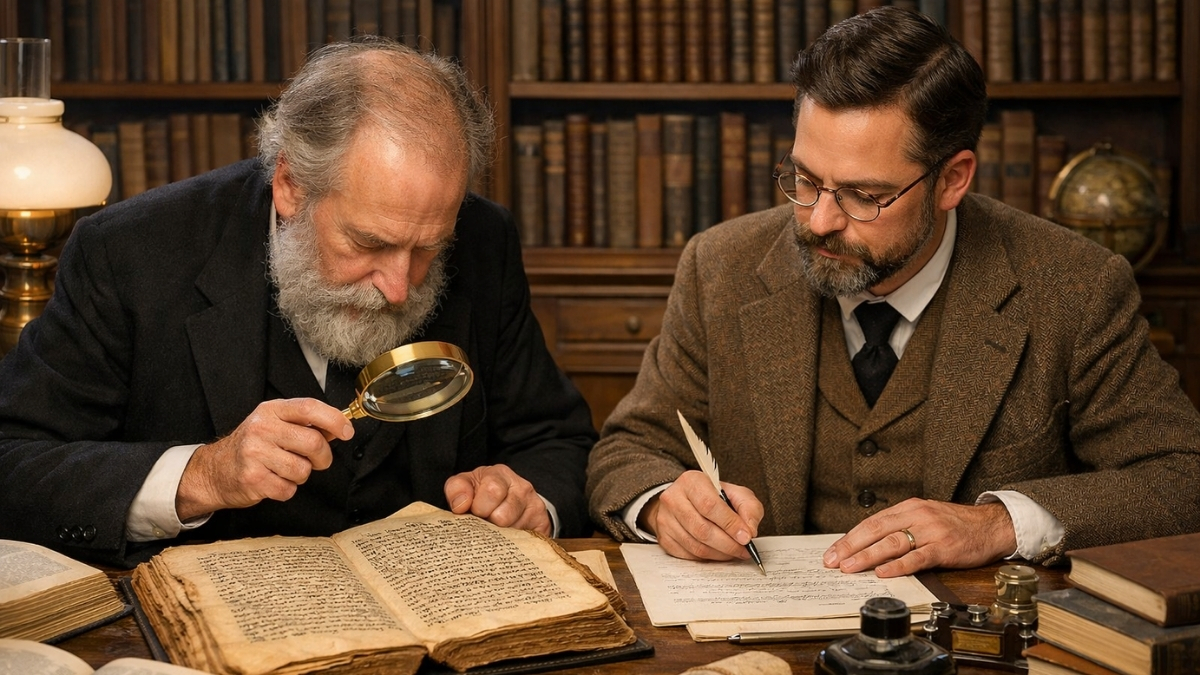
Early Christian paleography shows disciplined hands, papyrus-to-parchment advances, and codex design that secured a stable New Testament text from the second century.
Introduction to New Testament Textual Criticism: Definition, Scope, Priority, and the Scholarly Necessity of Reconstructing the Original Text
Textual criticism restores the New Testament’s original words by weighing early manuscripts, prioritizing documentary evidence, and correcting later additions.
Introduction to New Testament Textual Criticism: Definition, Scope, Methods, and Why It Comes First
Foundational guide to New Testament textual criticism, defining its aims, scope, and why establishing the original text must precede exegesis and translation.
Codex Sinaiticus—Refuting the Forgery Claims and Conspiracy Theories
A line-by-line, material and textual case shows Codex Sinaiticus is a genuine fourth-century Bible, not a nineteenth-century forgery or Simonides hoax.
Codex Sinaiticus—Evidence-Based Dating to 330–360 C.E. Using Paleography, Stylistics, Ink, and Codicology
Codex Sinaiticus dates to 330–360 C.E., shown by fourth-century script, four-column layout, Eusebian apparatus, carbon ink main text, and early correction layers.
Inerrancy and New Testament Textual Criticism: How the Documentary Method and Early Alexandrian Witnesses Secure the Original Text
Early papyri and the documentary method show how the New Testament’s original, inerrant text is identifiable, stable, and historically recoverable.
The Book of Acts and Textual Criticism: Evaluating the Manuscript Evidence and Restoring the Original Text
The Book of Acts presents unique challenges in textual criticism, but early Alexandrian manuscripts allow us to restore the original text with a high degree of confidence
The Role of Early Nomina Sacra in Establishing the Original Text of the New Testament
Early nomina sacra reveal a stable scribal culture in the New Testament’s transmission, offering key evidence for establishing original readings across manuscripts.
Guardians of the New Testament: Literacy, Power, and the Copyists of The New Testament
How literate were early Christians, and who preserved their books? A deep dive into readers, lectors, scribes, and the documentary evidence that guarded the text.
The Case Against Byzantine Priority: Reaffirming the Alexandrian Text Through Manuscript Evidence
The Byzantine text-type reflects later ecclesiastical tradition, not the original wording of the New Testament, which is preserved in the early Alexandrian witnesses.

