Salvation is Jehovah’s gift through Christ, received by living faith that trusts His grace, obeys His Word, and never treats salvation as wages.
The Grace Faith Receives — Salvation as a Gift, Not a Wage

Updated American Standard Version
Giving Bible readers what God said not what translators think God meant
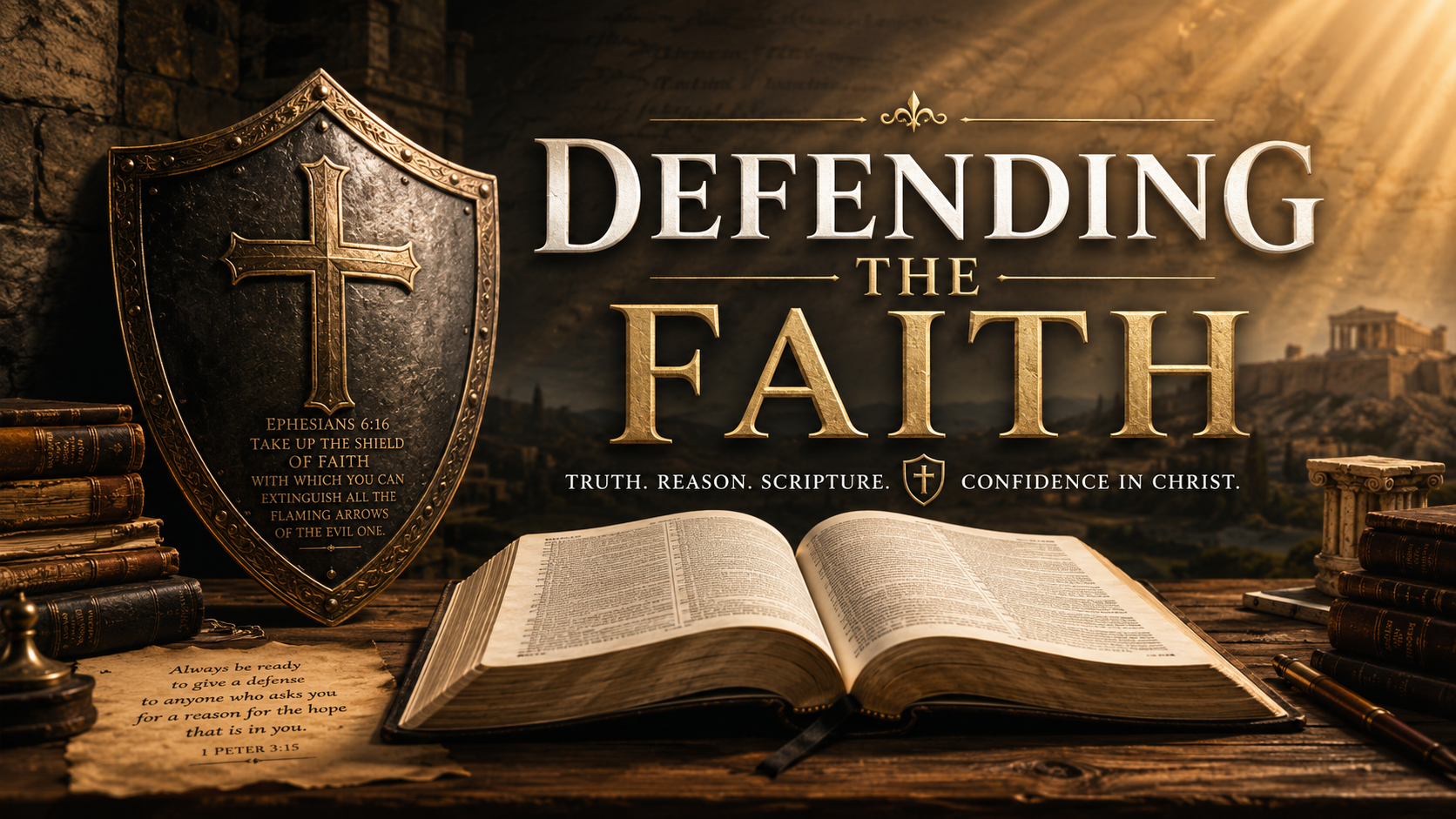
Defending the Faith is your resource for understanding and explaining why Christianity stands firm. We address common objections to the Bible’s reliability, the existence of God, the resurrection of Jesus, and ethical questions. Using a historical-grammatical approach to Scripture, we provide clear, biblically grounded answers to strengthen believers and engage skeptics.
Salvation is Jehovah’s gift through Christ, received by living faith that trusts His grace, obeys His Word, and never treats salvation as wages.

Biblical faith stands on Jehovah’s inspired Word, trusts Christ, produces obedience, and endures because Scripture is sufficient.

Biblical faith begins with hearing and accurate knowledge, grows into trusting allegiance, and leads to repentance, obedience, endurance, and life.

Christian faith looks beyond itself to Jesus Christ, the sole Mediator, ransom provider, risen Savior, and appointed King through Whom Jehovah gives life.

Every Christian should be prepared to give a reasoned biblical defense of Christian hope with accuracy, courage, gentleness, and reverence.

Christian apologetics requires reason, evidence, biblical knowledge, humility, courage, and complete loyalty to Christ without doctrinal compromise.

Christians can stand firm in a hostile world through biblical courage, disciplined speech, faithful conduct, and unwavering obedience to Jehovah.

Discover the biblical foundation of Christian apologetics and how believers can defend the faith with Scripture, reason, evidence, and respect.

Christian confidence rests on Scripture, Christ’s resurrection, faithful endurance, and Jehovah’s certain promise of eternal life.

Standing firm amid unbelief requires biblical knowledge, sound reasoning, courage, gracious defense, and unwavering loyalty to Jehovah’s Word.

